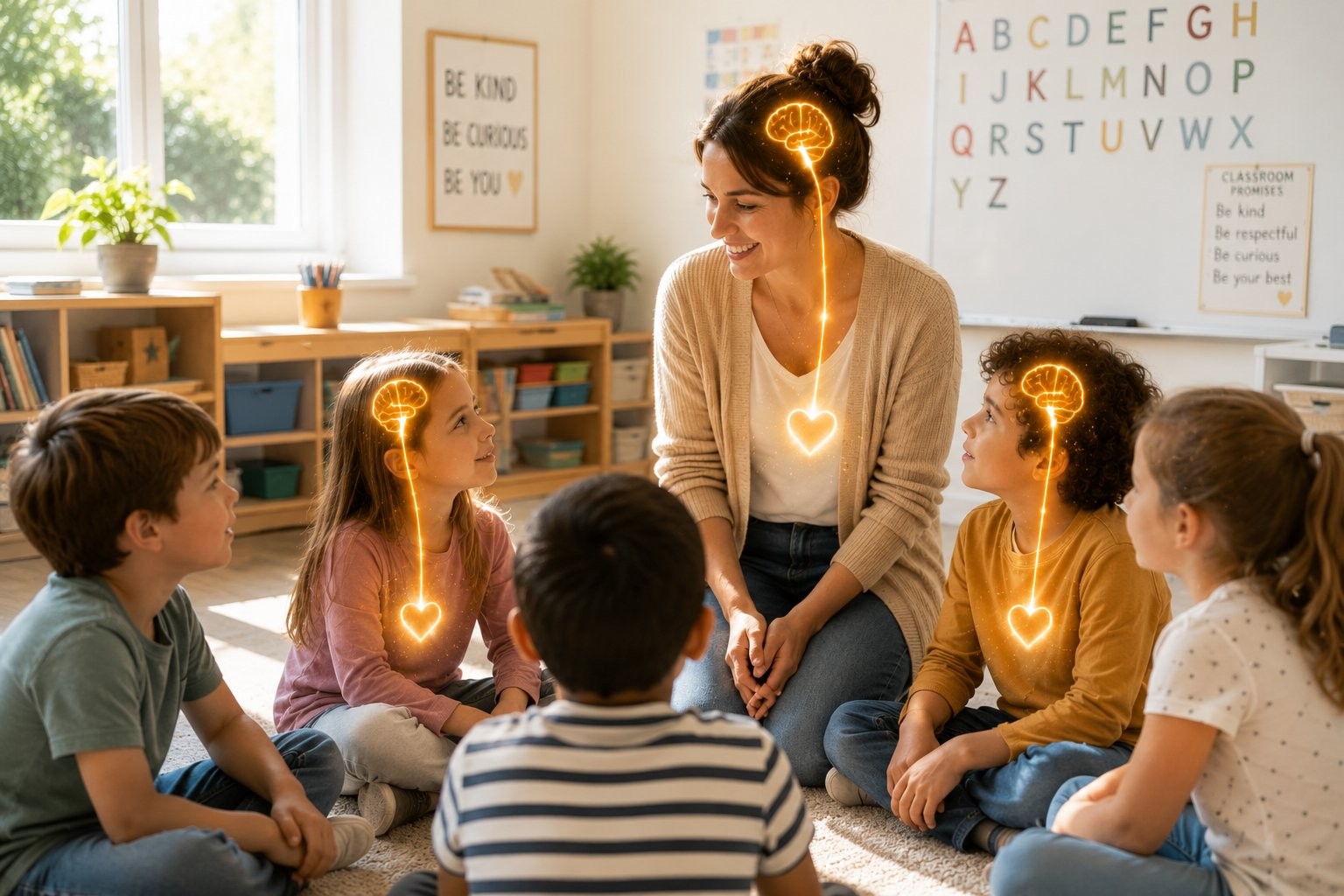
A 16-hour evidence-based seminar that gives teachers, counsellors, and SEN specialists the language, rituals, and co-regulation tools to grow self-regulation and emotional intelligence — in their classrooms and in themselves.
Evidence-informed and relationship-based
Practical strategies for immediate classroom use
16-hour professional development programme
Suitable for educators working with children aged 3–12
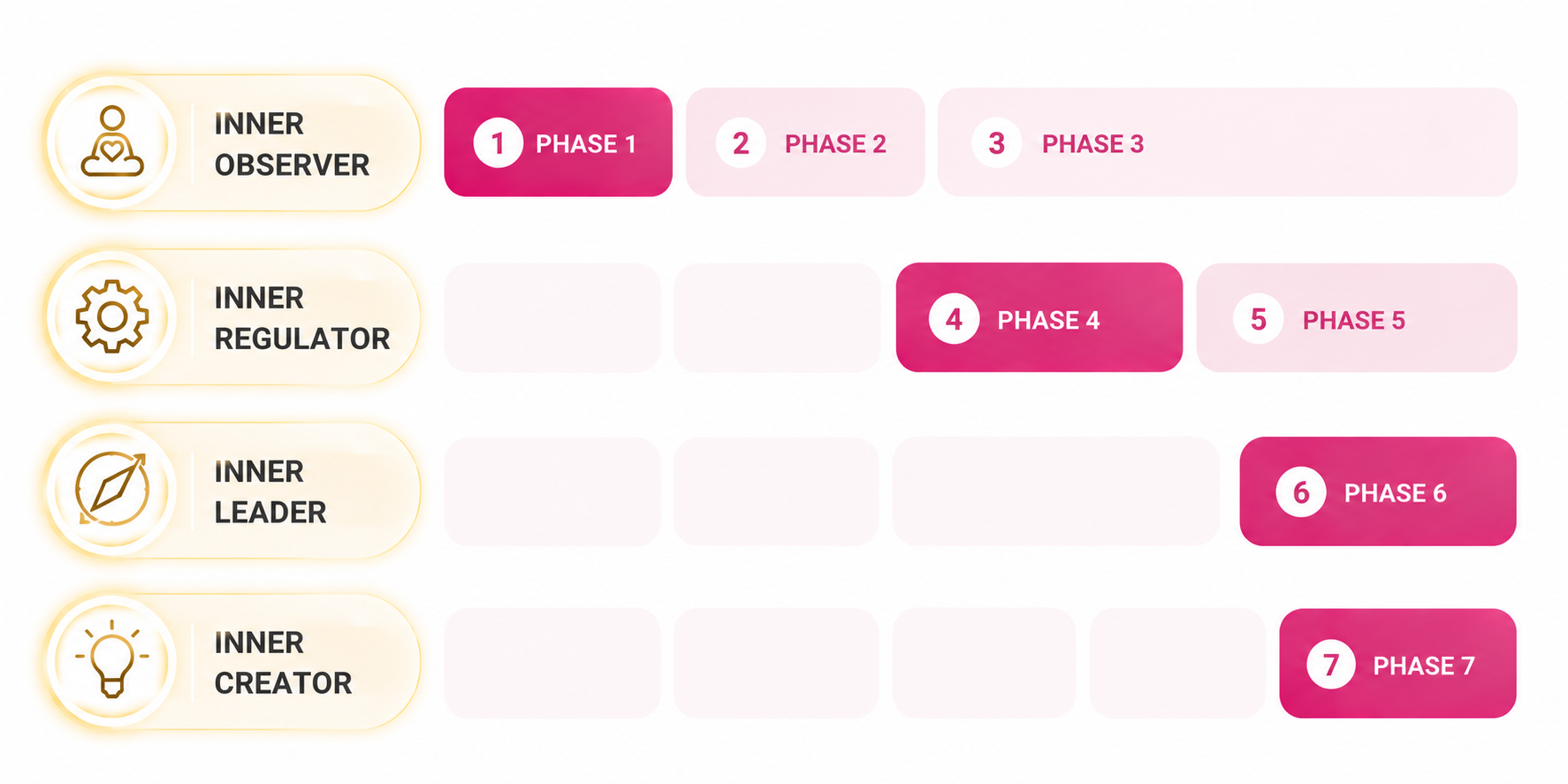
Develops the Inner Observer, Inner Regulator, and Inner Leader
Supports learning, behaviour, and wellbeing
The Inner Leader Method (ILM) is an integrative educational approach grounded in developmental psychology, neuroscience, metacognition, and social-emotional learning. ILM helps children move from externally driven behaviour to internally guided self-regulation. Through symbolic language, reflection, guided conversation, movement, and experiential learning, children learn to observe their thoughts, emotions, and impulses, developing greater awareness, emotional regulation, and conscious choice.
ILM helps children develop self-regulation through the Inner Leadership Cycle
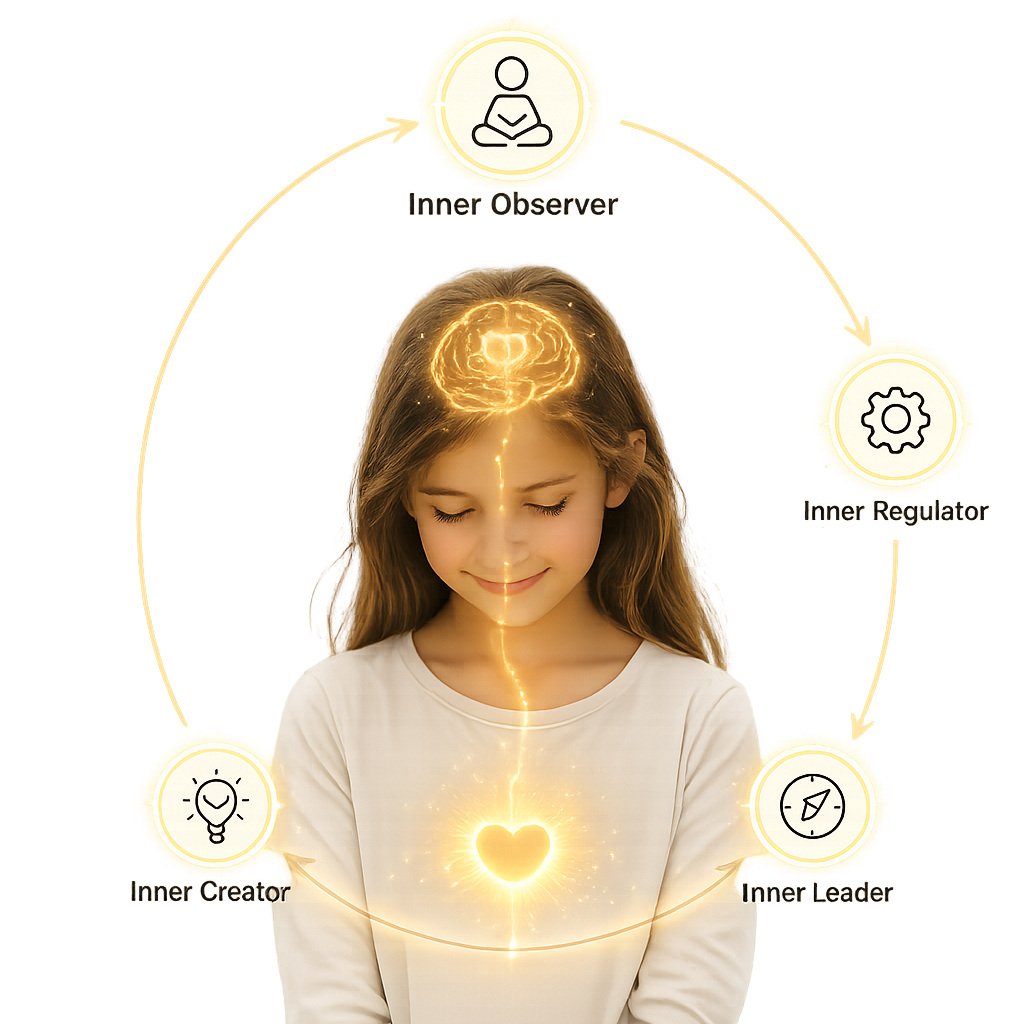
INNER OBSERVER
Metacognitive awareness — noticing thoughts, emotions, bodily sensations, and impulses without being swept by them.
INNER REGULATOR
Self-regulation skills that support emotional balance, frustration tolerance, and responsible behaviour.
INNER LEADER
Self-leadership, responsibility, self-efficacy, and the ability to make conscious choices.
INNER CREATOR
The vision and meaning of who you want to be as a person by acting on it.
Children don't become who we tell them to be. They become who they experience us being.
ILM is designed for the professionals already doing the relational work — and gives them a shared method to do it more consistently:
- Preschool educators
- Primary school teachers
- School counsellors
- Special education teachers
- SEN specialists
CORE MACHANISMS
ADULT-FIRST APPROACH
The method begins with the educator. Through modelling, co-regulation, and intentional interaction, adults create the conditions that support children's emotional and cognitive development.
SYMBOLIC NARRITIVE
Children explore thoughts, emotions, impulses, and behaviours through symbolic frog characters, providing a developmentally appropriate language for understanding their inner experiences.
METACOGNITION AWARNESS
Children learn to distinguish between themselves and their thoughts, emotions, and impulses. This ability to observe internal experiences forms the foundation of self-awareness, reflection, and self-regulation.
SYMBOLIC DISTANCE
By recognising that thoughts and emotions are experiences rather than identity, children develop greater psychological flexibility, emotional awareness, and behavioural choice.
BODDY-BASED SELF-REGULATION
Breathing, movement, sensory awareness, and grounding techniques help children recognise and regulate their emotional and physiological states.
RELATIONSHIP-CENTERED DEVELOPMENT
The method recognises that self-regulation develops through safe, attuned relationships. Trust, connection, and co-regulation are essential foundations for learning and wellbeing.
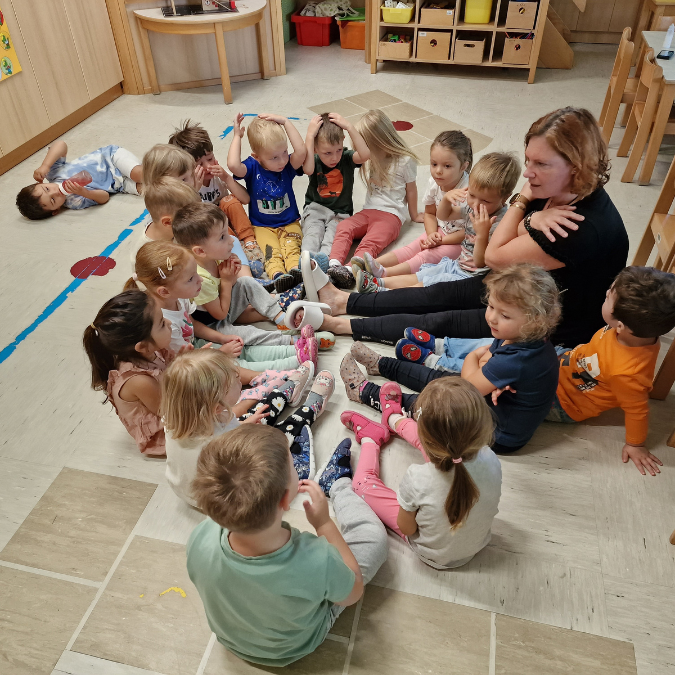
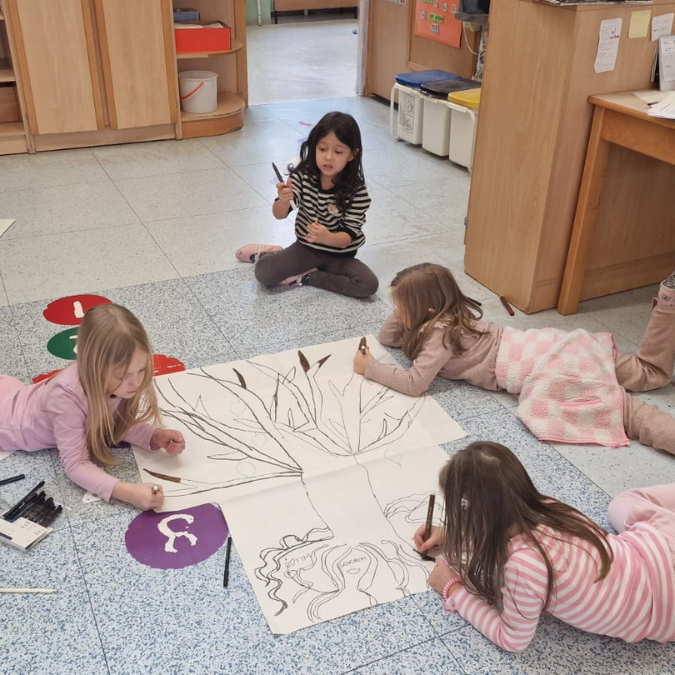
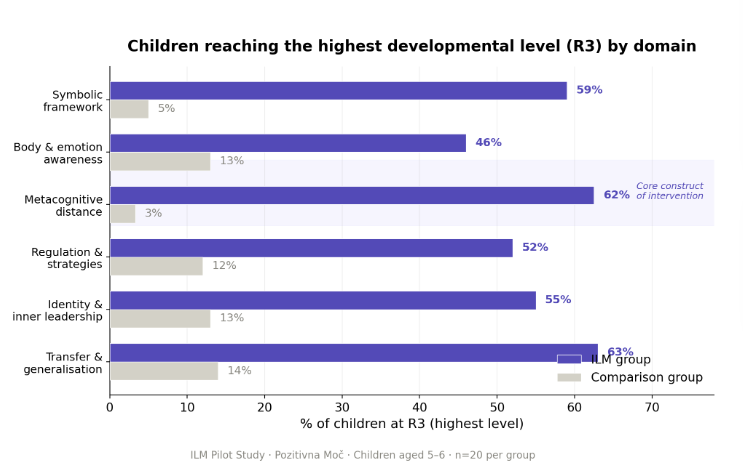
evidence: 70% OF EDUCATORS NOTICE AFTER 2 MONTH
From Behaviour Management to Understanding the Child's Inner World
Educators report a shift from managing behaviour to understanding the thoughts, emotions, and needs behind it. Behaviour becomes valuable information rather than simply a problem to correct.
Greater Self-Regulation and Emotional Calm in Adults
Participants develop greater self-awareness and emotional regulation, resulting in less impulsive reacting, more conscious responses, and reduced stress in everyday interactions with children.
More Conscious Communication
Educators become more intentional in their communication, using calmer language, a slower pace, and the symbolic language of the Thought Frogs to support connection and understanding.
Increased Emotional Awareness and Self-Regulation in Children
Children become more capable of recognising emotions, understanding their inner experiences, and using self-regulation strategies before emotions escalate into challenging behaviour.
Improved Classroom Climate and Stronger Relationships
Educators report calmer group dynamics, stronger relationships, greater trust, and more effective conflict resolution among children.
Greater Responsibility, Empathy, and Self-Leadership
Children increasingly take responsibility for their actions, demonstrate empathy towards others, and show greater ability to make conscious choices rather than reacting automatically.
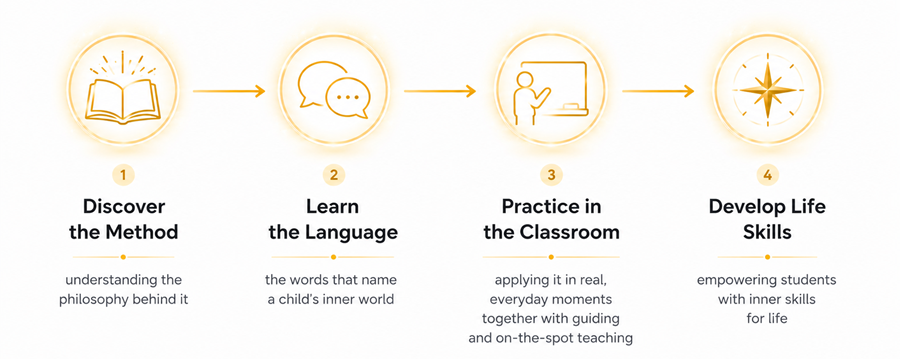
FOUDATIONS OF INNER LEADER METHOD
Developmental psychology
How regulation emerges through stages and relationships.
Neuroscience
The brain–body loop behind emotion and attention.
Metacognition
Thinking about thinking, in age-appropriate form.
Social-emotional learning
The CASEL competencies, applied daily.
Relationship-based education
Attuned, safe adults as the regulating system.
WHAT PARTICIPANTS SAY ABOUT THE 16-HOUR SEMINAR
"This training has been a deeply enriching experience that has transformed the way I work with children. It has strengthened my empathy, patience, trust in children's development, and my ability to focus on solutions rather than problems."
"This programme helped me realise that emotional intelligence is developed not only through dedicated lessons, but through every interaction we have with children. Every response, every conversation, and every calm moment contributes to creating a safe, supportive, and emotionally rich learning environment."
"The experience was incredible. Seeing children with emotional and behavioural challenges, as well as autism, embrace the method and thrive with it has been truly inspiring. What touched me most was witnessing their growing inner strength and confidence."
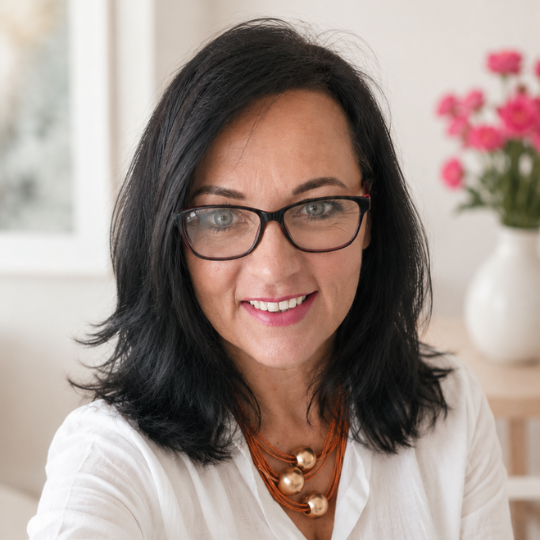
ABOUT THE CREATOR
Alex Pin is a former primary school teacher, author, parenting educator, and creator of the Inner Leader Method (ILM) -Miselne žabice.
Drawing on more than a decade of experience working with children, parents, and educators, she developed a practical and relationship-based approach that helps children understand their inner world, regulate their emotions, and develop self-leadership.
Her work integrates insights from education, developmental psychology, neuroscience, metacognition, and social-emotional learning. Through training programmes, workshops, books, and educational resources, she supports adults in creating environments where children can thrive academically, socially, and emotionally.
Her mission is to help children develop the inner skills behind learning, behaviour, wellbeing, and lifelong success.